

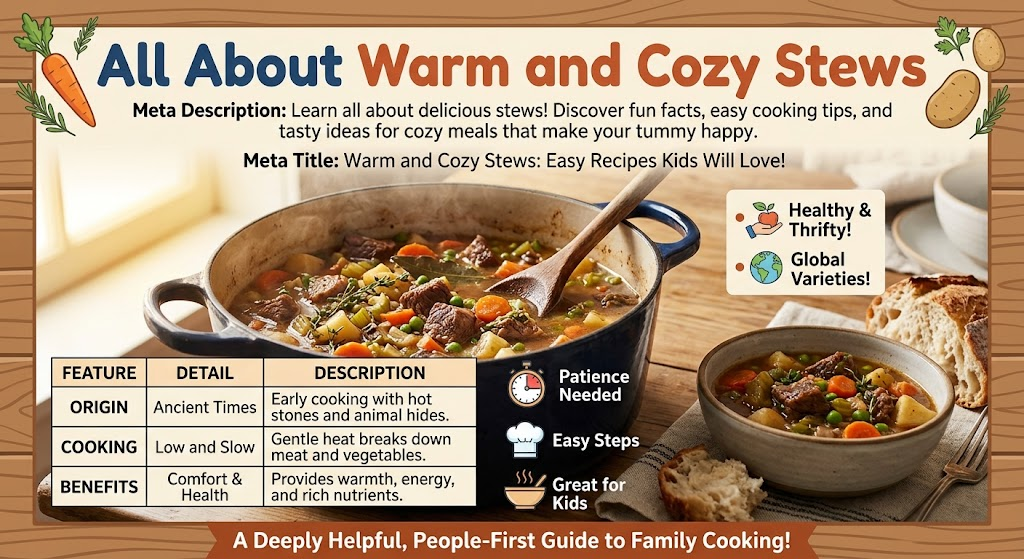
Stews are one of the most comforting foods you can eat on a chilly day. When the weather gets cold outside, a hot bowl of stew feels like a warm hug. A stew is made by cooking chunks of meat, vegetables, and beans slowly in a flavorful liquid like broth warm and cozy stews or water. Because everything cooks together for a long time, all the yummy flavors mix up and make the sauce taste amazing. It is a very old way of cooking that people have used for hundreds of years to keep themselves warm and strong.
Long ago, people did not have modern stoves or ovens like we do today. They cooked their food over open fires in heavy iron pots hanging from hooks. They would put in whatever vegetables they grew in their gardens and whatever meat they had. As the pot bubbled slowly over the fire, the hard vegetables became soft and tender. This made the food easy to chew and digest for everyone in the family. Today, we still love stews because they make our homes smell wonderful while they cook.
Table of Contents
Why Stews Are Great for Every Season
Even though stews are famous for being winter food, you can actually enjoy them all year long. During the spring and summer, you can make lighter stews using fresh green peas, tender carrots, and chicken broth. These lighter meals still give you plenty of energy without making you feel too hot. Cooking is all about trying new things and seeing what tastes best to you and your family.
When autumn and winter arrive, you can switch to heavier ingredients like potatoes, sweet potatoes, and beef. The best part about making a stew is that there are no strict rules to follow. If you do not like mushrooms, you can leave them out and add warm and cozy stews extra corn instead. It is a very forgiving dish, which means it is hard to ruin. Even beginner cooks can make a wonderful meal on their very first try with just a little bit of patience.
The Magic of Slow Cooking
The secret to a great stew is time and patience. When you cook food slowly over low heat, magic happens inside the pot. The tough parts of the meat break down until they melt right in your mouth. Meanwhile, the vegetables soak up all the delicious spices and broth. This slow process is what separates a quick soup from a rich and hearty stew.
You do not have to watch the pot every single minute while it cooks. Once you put everything inside and bring it to a gentle simmer, the stove does most of the hard work for you. You can spend that time doing your homework, reading a book, or playing a game with your friends. Just remember to stir it every now and then so nothing sticks to the bottom of the pot.
Fun History Facts About Stews
Did you know that stews are one of the oldest cooking methods in human history? Long before humans invented pottery, our ancestors cooked food in animal skins or turtle shells filled with water and hot stones. Archaeologists have found evidence of meat stews cooked thousands of years ago in different parts of the world. Every culture developed its own special way of making a comforting pot of food.
In ancient times, sailors on long ocean voyages ate a type of stew every single day. It was an easy way to use up leftover meat and ship vegetables before they went bad. Famous explorers like Christopher Columbus and Marco Polo wrote about eating warm pots of stew during their travels. It is amazing to think that you are eating the exact same kind of comfort food that people ate hundreds of years ago!
Healthy Ingredients You Can Use
Making a healthy stew is super easy because you can pack it full of colorful vegetables. Carrots give you vitamin A for healthy eyes, while potatoes give you energy to run and play. You can also add beans, lentils, and peas to get plenty of protein. Eating a bowl warm and cozy stews of vegetable-packed stew is a fantastic way to reach your daily nutrition goals without even trying hard.
Another great thing about stews is that they help reduce food waste in your kitchen. If you have a few carrots or celery stalks sitting in the fridge looking a little sad, just chop them up and toss them into your pot. They will soften right up and taste delicious. It is a smart and thrifty way to make sure good food never goes to waste in your home.
Easy Kitchen Tools You Will Need
You do not need fancy chef equipment to make a fantastic stew at home. The most important tool is a heavy-bottomed pot, like a Dutch oven, which spreads heat evenly. You will also need a sharp knife for chopping vegetables, a cutting board, and a big wooden spoon for stirring. Having the right tools ready before you start makes cooking safe and fun.
If your family is very busy during the week, a slow cooker is another wonderful option. You can add all your ingredients in the morning before you go to school or work. By the time you come back in the afternoon, the entire house will smell incredible, and dinner will be ready to eat. It is like having a helper in the kitchen who cooks while you are away!
Simple Steps to Make Your First Stew
Making a basic stew starts with building a good flavor base. First, you usually chop up onions and garlic and cook them in a little bit of oil until they smell sweet and soft. Next, you add your meat and brown the outside to lock in all the tasty juices. This step adds a deep, rich flavor to the final dish.
After browning the meat, you pour in your liquid, such as vegetable or chicken broth. Then comes the fun part: adding all your favorite chopped vegetables and herbs like thyme or bay leaves. Put the lid on the pot, turn down the heat, and let it simmer until everything is tender. Ladle it into bowls and enjoy your warm creation!
Fun Facts Table About Stews
| Feature | Detail | Description |
| Origin | Ancient Times | Used by early humans with hot stones and animal hides. |
| Main Liquid | Broth or Stock | Gives the dish a rich, savory base flavor. |
| Cooking Style | Low and Slow | Breaks down tough meat and softens hard vegetables. |
| Best Season | Autumn & Winter | Provides warmth and comfort on chilly days. |
| Key Benefit | High Nutrition | Easy way to eat lots of healthy vitamins and minerals. |
Different Kinds Around the World
Every country has its own special version of a warm stew. In Ireland, people make a famous dish with lamb, potatoes, and onions. In Hungary, they warm and cozy stews make a rich stew called goulash flavored with sweet red paprika. In parts of Africa, people love hearty peanut stews that combine sweet and savory flavors in a unique way.
Trying stews from different cultures is a fun way to travel the world without leaving your kitchen. You can learn about different spices and ingredients that people use across the globe. It opens your eyes to new tastes and helps you appreciate how different cultures create comfort food using local ingredients.
Tips for the Best Flavor Ever
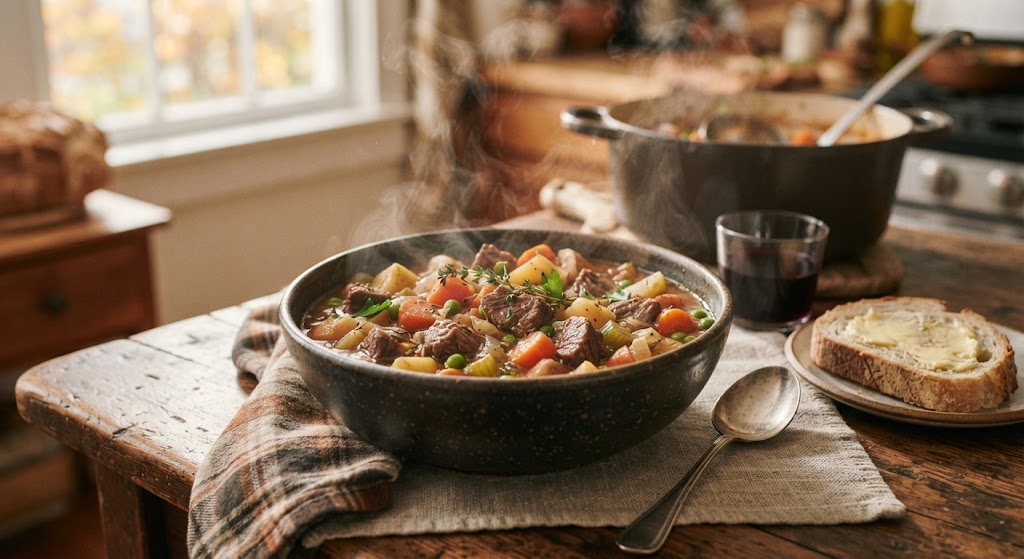
If you want your stew to taste extra special, try browning your meat properly before adding the liquid. That golden-brown crust on the bottom of the pot holds tons of flavor. You can scrape it up gently with your wooden spoon when you pour in the broth.
Another great tip is to let your stew sit for a few minutes before eating. Letting it rest helps the flavors settle and cool down to a safe temperature. warm and cozy stews Some people even think stews taste better the next day after sitting in the fridge overnight! The flavors get a chance to mingle and become even more delicious.
Frequently Asked Questions (FAQs)
What is the difference between a soup and a stew?
A soup has a lot of liquid and is mostly broth, while a stew has less liquid and is thick and chunky.
Can I make a stew without any meat?
Yes! You can make an amazing vegetarian or vegan stew using beans, lentils, tofu, and lots of fresh vegetables.
Why does a stew need to cook slowly?
Slow cooking helps tough cuts of meat become tender and lets all the vegetable flavors blend together nicely.
What is the best pot to use for cooking?
A heavy iron pot or a Dutch oven works best because it holds heat very well and cooks food evenly.
How do I thicken a runny stew?
You can mix a spoonful of flour or cornstarch with a little cold water, stir it in, and let it simmer until thick.
Can I freeze leftover stew for later?
Yes, stews freeze very well! Just let them cool completely, put them in a sealed container, and keep them in the freezer.
Conclusion
To wrap up, warm and cozy stews are much more than just a comforting cold-weather meal; they are a timeless culinary tradition rooted warm and cozy stews in patience, rich flavors, and wholesome ingredients. Whether you prefer a classic, slow-simmered beef and root vegetable medley or a vibrant, spiced plant-based alternative, the magic of a great stew lies in its ability to bring people together around the table.
By mastering the basics—layering your aromatics, searing your proteins, building a flavorful broth, and letting it simmer to perfection—you can create a deeply satisfying dish every single time. Grab your favorite heavy-bottomed pot, embrace the slow-cooking process, and enjoy the nourishing warmth of a homemade stew.
