

In today’s hyper-connected economy, organizations no longer have the luxury of waiting hours—or even minutes—for insights. Customers expect instant responses, operations demand immediate adjustments, and markets shift in seconds. This urgency has fueled the rapid adoption of real-time analytics platforms, systems designed to process, analyze, and deliver data insights as events occur.
From e-commerce and finance to healthcare and manufacturing, businesses are turning to streaming data architectures to remain competitive. But what exactly makes these platforms so transformative? And how can organizations leverage them effectively without overwhelming their infrastructure or teams?
This comprehensive guide explores the architecture, benefits, challenges, use cases, and future trends shaping the world of modern data processing.
Understanding Real-Time Analytics Platforms
Real-Time Analytics Platforms: At their core, real-time analytics platforms enable organizations to ingest and process data continuously, delivering insights almost instantly after data is generated. Unlike traditional batch processing systems that analyze data at scheduled intervals, these platforms operate on streaming data pipelines.
This shift from static reporting to dynamic intelligence allows businesses to detect anomalies, personalize customer experiences, optimize operations, and make faster decisions.
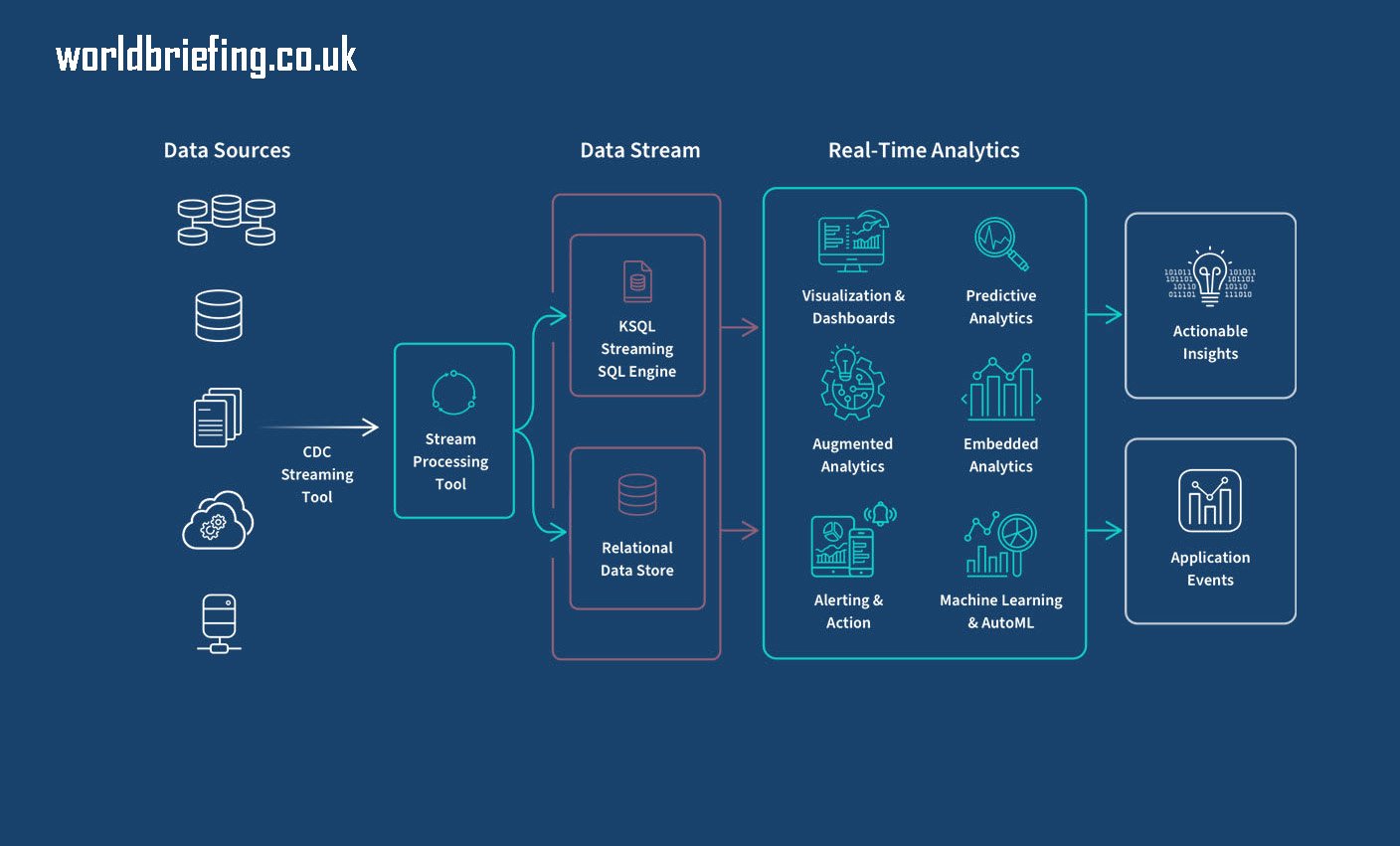
A typical architecture includes:
- Data ingestion layer for capturing event streams
- Stream processing engine to transform and analyze data
- Storage layer optimized for fast queries
- Visualization or application layer for delivering insights
Technologies such as Apache Kafka and Apache Flink often power these ecosystems, handling high-throughput event streams with minimal latency.
The result is a dynamic system that bridges the gap between data generation and actionable insight.
Why Businesses Are Investing in Real-Time Analytics Platforms
The demand for immediate insight is not just a technological trend—it is a strategic necessity. Organizations invest in these systems for several compelling reasons:
1. Faster Decision-Making
Executives and operational teams can act on live dashboards rather than outdated reports. In high-stakes industries like finance, seconds can translate into millions of dollars gained or lost.
2. Enhanced Customer Experience
Streaming analytics enables personalized recommendations, instant fraud detection, and proactive customer support. Retailers, for example, can adjust offers based on browsing behavior as it happens.
3. Operational Efficiency
Manufacturing plants can monitor equipment sensors in real time to predict maintenance needs. Logistics companies can reroute shipments dynamically based on live traffic conditions.
4. Competitive Advantage
Organizations that react instantly to market signals outperform those dependent on delayed reporting cycles.
The ability to shift from reactive to proactive operations is often the defining difference between industry leaders and laggards.
Core Components of Modern Real-Time Analytics Platforms
To appreciate their value, it’s important to understand how these systems are structured. Although implementations vary, most architectures share similar foundational layers.
Data Ingestion
Data originates from diverse sources:
- IoT sensors
- Mobile applications
- Web clickstreams
- Financial transactions
- Social media feeds
Ingestion tools collect this data continuously and route it into a streaming infrastructure. These systems must handle massive volumes without creating bottlenecks.
Stream Processing
Once ingested, data flows through processing engines that:
- Filter irrelevant information
- Aggregate metrics
- Detect anomalies
- Trigger alerts
- Enrich datasets with contextual data
Unlike batch processing, this occurs in milliseconds.
Storage and Querying
Processed data may be stored in specialized databases optimized for high-speed reads and writes. Some organizations leverage cloud-native services such as Amazon Web Services, Google Cloud, or Microsoft Azure to manage infrastructure elastically.
Cloud data platforms like Snowflake can also integrate with streaming systems to support hybrid analytics environments.
Visualization and Action Layer
The final layer presents insights through:
- Dashboards
- Automated alerts
- Embedded analytics in applications
- API integrations
In advanced implementations, machine learning models operate within the pipeline, generating predictive outputs instantly.
Real-Time Analytics Platforms vs. Traditional Batch Systems
While batch systems remain useful for historical analysis and reporting, they lack immediacy. The contrast between the two approaches highlights the advantages of streaming architectures.
| Feature | Batch Analytics | Real-Time Analytics |
|---|---|---|
| Data Processing | Scheduled intervals | Continuous |
| Latency | Minutes to hours | Milliseconds to seconds |
| Use Cases | Monthly reports | Fraud detection, live monitoring |
| Infrastructure | Often simpler | More complex but scalable |
Batch systems answer the question: What happened?
Real-time systems answer: What is happening right now—and what should we do about it?
This distinction is crucial in industries where immediate action is essential.
Industry Use Cases for Real-Time Analytics Platforms
The application of streaming analytics extends across nearly every sector.
Financial Services
Banks and fintech companies rely on instant transaction monitoring to detect fraud. Machine learning models evaluate risk scores in milliseconds, blocking suspicious activity before damage occurs.
E-Commerce
Online retailers track browsing behavior, cart activity, and purchase patterns. Recommendations update dynamically, increasing conversion rates and customer satisfaction.
Healthcare
Hospitals use streaming data from medical devices to monitor patients continuously. Alerts can notify clinicians of irregularities in vital signs.
Manufacturing
Industrial IoT sensors feed performance metrics into analytics pipelines. Predictive maintenance reduces downtime and prevents costly breakdowns.
Telecommunications
Network providers monitor traffic patterns in real time to optimize bandwidth and detect service disruptions quickly.
Each use case emphasizes speed, responsiveness, and adaptability.
The Role of Cloud in Scaling Real-Time Analytics Platforms
Cloud computing has dramatically accelerated adoption. Before cloud services became mainstream, implementing streaming architectures required significant upfront investment in hardware and maintenance.
Today, managed services allow organizations to:
- Scale resources automatically
- Reduce operational overhead
- Deploy globally in minutes
- Integrate advanced AI tools seamlessly
Elastic infrastructure ensures that sudden traffic spikes—such as holiday shopping surges—do not disrupt performance.
Cloud-based systems also support hybrid models where streaming data is combined with historical datasets for deeper analysis.
Data Governance and Security in Real-Time Analytics Platforms
With speed comes responsibility. Handling streaming data—especially sensitive information—requires rigorous governance frameworks.
Key considerations include:
Data Privacy
Organizations must comply with regulations governing personal information. Encryption, anonymization, and access controls are critical.
Data Quality
Real-time pipelines can amplify errors if data validation is weak. Automated quality checks help maintain integrity.
Security Monitoring
Streaming analytics can also protect itself. Many companies implement anomaly detection to identify unauthorized access or suspicious activity within their own systems.
Balancing agility with compliance is one of the most challenging aspects of implementation.
Challenges of Implementing Real-Time Analytics Platforms
Despite their advantages, these systems are not without obstacles.
Architectural Complexity
Streaming pipelines involve multiple interconnected components. Designing resilient, fault-tolerant systems requires expertise.
Skill Gaps
Data engineers, stream processing specialists, and DevOps professionals must collaborate closely. Organizations often struggle to find talent with experience in distributed systems.
Cost Management
Although cloud scalability is beneficial, uncontrolled data growth can increase expenses rapidly.
Latency Trade-Offs
Ultra-low latency often demands specialized infrastructure. Companies must determine acceptable performance thresholds based on business needs.
Successful adoption depends on strategic planning rather than technology alone.
Best Practices for Building Effective Real-Time Analytics Platforms
Organizations that achieve sustainable success typically follow structured guidelines.
Start with Clear Objectives
Define measurable goals before selecting technologies. Whether improving fraud detection rates or reducing downtime, clarity prevents unnecessary complexity.
Design for Scalability
Choose architectures that can grow with demand. Microservices and event-driven frameworks offer flexibility.
Prioritize Observability
Monitoring system health in real time ensures reliability. Logging, tracing, and metrics collection should be built into the platform.
Integrate with Existing Systems
Streaming analytics should complement—not replace—historical data warehouses. Hybrid architectures often provide the best balance.
Automate Where Possible
Automation reduces human error and accelerates deployment cycles.
These principles reduce risk while maximizing return on investment.
Real-Time Analytics Platforms and Artificial Intelligence
Artificial intelligence and streaming analytics are increasingly intertwined. Machine learning models can operate directly within data pipelines, producing predictions in milliseconds.
Examples include:
- Real-time recommendation engines
- Dynamic pricing algorithms
- Predictive maintenance models
- Fraud risk scoring systems
Deploying models in streaming environments requires continuous retraining and monitoring to prevent performance drift.
The synergy between AI and streaming data is reshaping how organizations interact with information.
Measuring ROI from Real-Time Analytics Platforms
Quantifying return on investment can be challenging but essential.
Common performance indicators include:
- Reduced operational downtime
- Increased revenue from personalized offers
- Lower fraud losses
- Faster incident response times
- Improved customer retention rates
Beyond financial metrics, organizations often report cultural transformation. Teams become more agile, data-driven, and collaborative.
The intangible value of faster insight frequently surpasses direct cost savings.
Future Trends in Real-Time Analytics Platforms
The evolution of streaming technology continues at a rapid pace.
Edge Computing Integration
Processing data closer to its source reduces latency further. IoT environments increasingly rely on edge analytics to filter information before sending it to central systems.
Unified Analytics Architectures
Modern designs blend streaming and batch processing into cohesive frameworks, eliminating silos.
Serverless Streaming
Serverless technologies reduce operational burden by abstracting infrastructure management entirely.
Greater Democratization
Low-code tools and managed services are making advanced analytics accessible to smaller organizations.
The future points toward increasingly intelligent, automated, and decentralized systems.
Choosing the Right Real-Time Analytics Platform
Selecting a solution requires evaluating several factors:
- Data volume and velocity
- Latency requirements
- Integration capabilities
- Budget constraints
- Team expertise
Organizations should conduct proof-of-concept projects before full deployment. Scalability tests and performance benchmarking provide clarity.
Vendor ecosystems, community support, and documentation quality also influence long-term success.
A thoughtful approach minimizes disruption and accelerates adoption.
The Strategic Importance of Real-Time Analytics Platforms
In a world where digital interactions generate massive volumes of data every second, waiting for reports is no longer viable. Organizations that embrace streaming architectures gain visibility into operations as they unfold.
The strategic impact extends beyond efficiency. Real-time insight transforms business models:
- Retail becomes predictive rather than reactive.
- Healthcare shifts from episodic care to continuous monitoring.
- Manufacturing evolves into intelligent automation.
- Financial services strengthen risk management in real time.
These systems empower organizations to act—not merely observe.
Conclusion
Real-time analytics platforms represent a fundamental shift in how businesses interact with data. By processing information continuously rather than periodically, they enable faster decisions, improved customer experiences, and operational resilience.
While implementation requires careful planning, technical expertise, and governance controls, the rewards are substantial. As cloud infrastructure matures, artificial intelligence advances, and edge computing expands, streaming analytics will only grow more integral to digital transformation strategies.
Organizations that invest thoughtfully today position themselves to thrive in an increasingly data-driven future—where insight is not delayed, but delivered exactly when it matters most.
